Groningen Seaports allocates waterside location, enabling production of 220,000 tons of Biomethanol per year until the end of the century
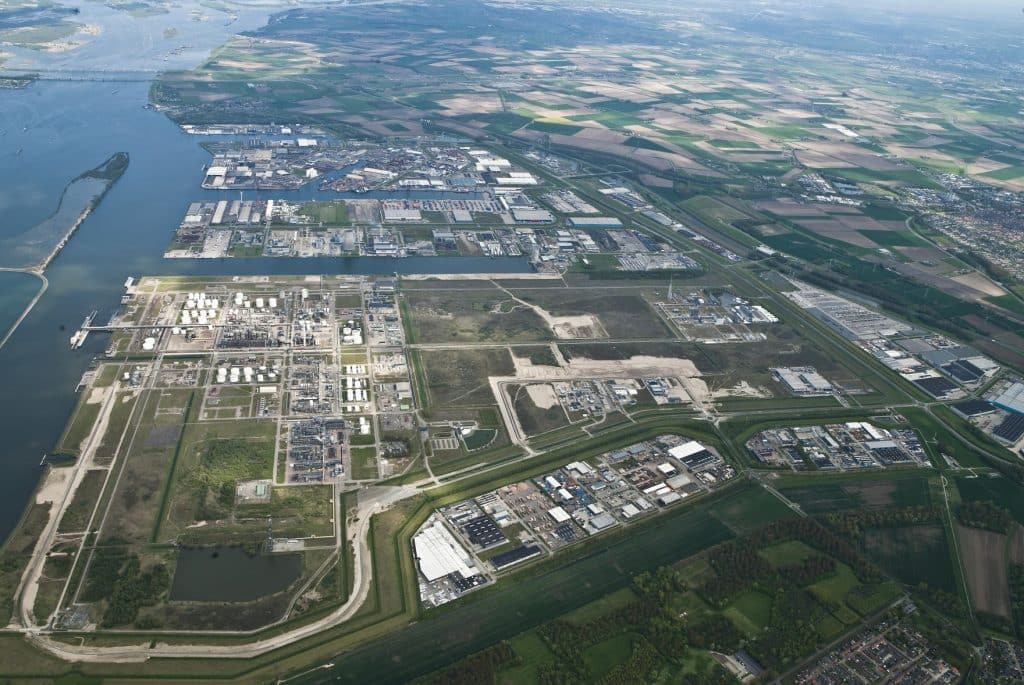
Biocommodities producer Perpetual Next and Groningen Seaports reached an agreement on March 11 regarding the reservation of a new biomethanol production site near Delfzijl. The 16-hectare location is situated directly on the waterway and other relevant infrastructure, ensuring optimal accessibility for (international) supply and distribution. In addition to the land for the construction of the torrefaction and methanol plant, Perpetual Next will have priority access to a newly constructed loading and unloading quay. With this new site allocation, Perpetual Next is positioned to produce biomethanol for the next 75 years following the completion of the production facility.
European biocommodities transition
Ellis Huijsmans, Chief Project Officer of Perpetual Next: “We are grateful to Groningen Seaports for reserving this excellent location for our plant. The direct access to the waterway, the dedicated loading and unloading quay, and the long-term production outlook beyond the year 2100 provide a solid foundation for our biomethanol production in Delfzijl. The work on the ‘milieaueffectrapportage vergunning’ (MER) a permit for environmental impact assessment, for the previously designated location has already demonstrated that Delfzijl is an ideal strategic industrial site in the Netherlands. This will be one of the three locations in the EU where we will produce biomethanol on a large scale. As such, we are at the forefront of the European raw materials transition.”
Incentive for biomethanol use in maratime sector
On January 1 of this year, the FuelEU Maritime regulation came into effect. This regulation promotes the use of renewable and low-carbon fuels in the maritime sector with the aim of reducing greenhouse gas emissions. The mandated reduction starts at 2% in 2025 and increases to 80% by 2050.
Biomethanol is widely recognized as a highly cost-effective and accessible alternative to conventional marine fuels, with significant potential for emissions reduction. The use of this fuel is actively supported by the International Maritime Organization (IMO). Biomethanol has a clear advantage over “grey” methanol as it is produced from non-fossil raw materials.
As part of FuelEU Maritime, a special pricing program has been introduced to encourage the use of renewable fuels over a 25-year period. This provides a significant incentive for the use of Perpetual Next’s biomethanol. The extensive European program has already resulted in orders for dual-fuel ships. In 2023, the first methanol-powered container ship departed from South Korea, and hundreds of such vessels are currently in development. It is expected that by 2028, more than 200 ships will operate on methanol.
European governments welcome Perpetual Next
Perpetual Next is receiving a warm welcome not only in the Netherlands. In January, Erkki Keldo, Estonia’s Minister of Economy & Industry, welcomed a delegation from Perpetual Next regarding the development of a biomethanol plant in the country. Following the visit, he issued the following statement: “The investment Perpetual Next is making in Vågari is strategic for Estonia. Their biomethanol plant will generate significant employment and strongly contribute to our economy.”
660.000 tons of biomethanol per year
Perpetual Next currently has three biomethanol production facilities in various stages of development. Each facility will have a production capacity of 220,000 tons per year. This makes Perpetual Next one of the frontrunners in the global biomethanol market. Worldwide, the demand for methanol is approximately 100 million tons per year and is expected to grow exponentially to over 500 million tons per year by 2050. The majority is used by the chemical industry to manufacture everyday products such as resins, adhesives, paints, plastics, and pharmaceuticals. Global methanol demand is rising exponentially, as it is also emerging as a key alternative fuel for the shipping industry.
Wood waste
Perpetual Next’s biomethanol is produced from low-grade carbon sources, primarily wood waste (such as demolition wood). The use of wood waste for biomethanol production contributes to the circular economy and helps reduce greenhouse gas emissions. It serves as an alternative to fossil fuel-derived methanol, supporting a more sustainable chemical industry and maritime sector.